For Fantasy Premier League (FPL) managers whose Wildcards are still intact, when is the best time to use them?
In this article, we discuss the pros and cons of playing Wildcards in Gameweeks 32 and 35, the two most popular remaining windows.
GAMEWEEK 32 WILDCARD: PRO
Gameweek 33 Double Bench Improvement
The Gameweek 32 wildcard allows you to load up on a Gameweek 33 ‘doubler’, taking Bench Boost into account.
Bournemouth, Brighton and Hove Albion, Burnley, Chelsea, Leeds United and Manchester City are the six teams playing twice in Gameweek 33:
Therefore, you can potentially include 14 ‘multipliers’ on your Wildcard, as well as the form Bruno Fernandes (£10.3m), which was particularly hard to leave out considering the Gameweek 32 tie at home to Leeds.
While not guaranteed, this approach puts you in a very strong position to achieve a big Double Gameweek 33 score, which in turn will push you up the rankings.
Neale has looked at some of the Gameweek 32 Wildcard drafts to consider in this article here.
Get to Brighton early
Brighton have a great Gameweek 32 fixture, away to Burnley, so this is the perfect entry point for a triple-up.

We’ve already discussed the benefits of defensive triple-ups here, with Jack Hinshelwood (£5.1 million) and Danny Welbeck (£6.2m) alternative further down the line.
Like Brighton, Leeds also have a few games worth targeting in Matchweek 35 to 38 (BUR, total, BHA, whu), so take a look at the decent bets on these games.
Stock up on Man City

Man City visit Chelsea in Gameweek 32, who have kept just one clean sheet in 15 Premier League games.
They followed that up with a Double Gameweek 33, and remember, City will get another ‘double’ beyond that, most likely in Gameweek 36.
Erling Haaland (£14.4m), recently sold by many FPL managers, will have plenty of interest after Saturday’s hat-trick against Liverpool, while Antoine Semenyo (£8.2m) is hard to ignore in midfield.
Defensively, Nico O’Reilly (£5.0m) looks a threat regardless of position, as demonstrated by his assist in the FA Cup against the Reds.
Game Week 34 Free Hits
After Bournemouth, Brighton, Burnley, Chelsea, Leeds and Man City ‘doubled’ in Gameweek 33, the same six teams then went blank in Gameweek 34.
Gameweek 32 wildcarders can then Free Hit in Gameweek 34, allowing you to build the optimal squad for a particular match round.
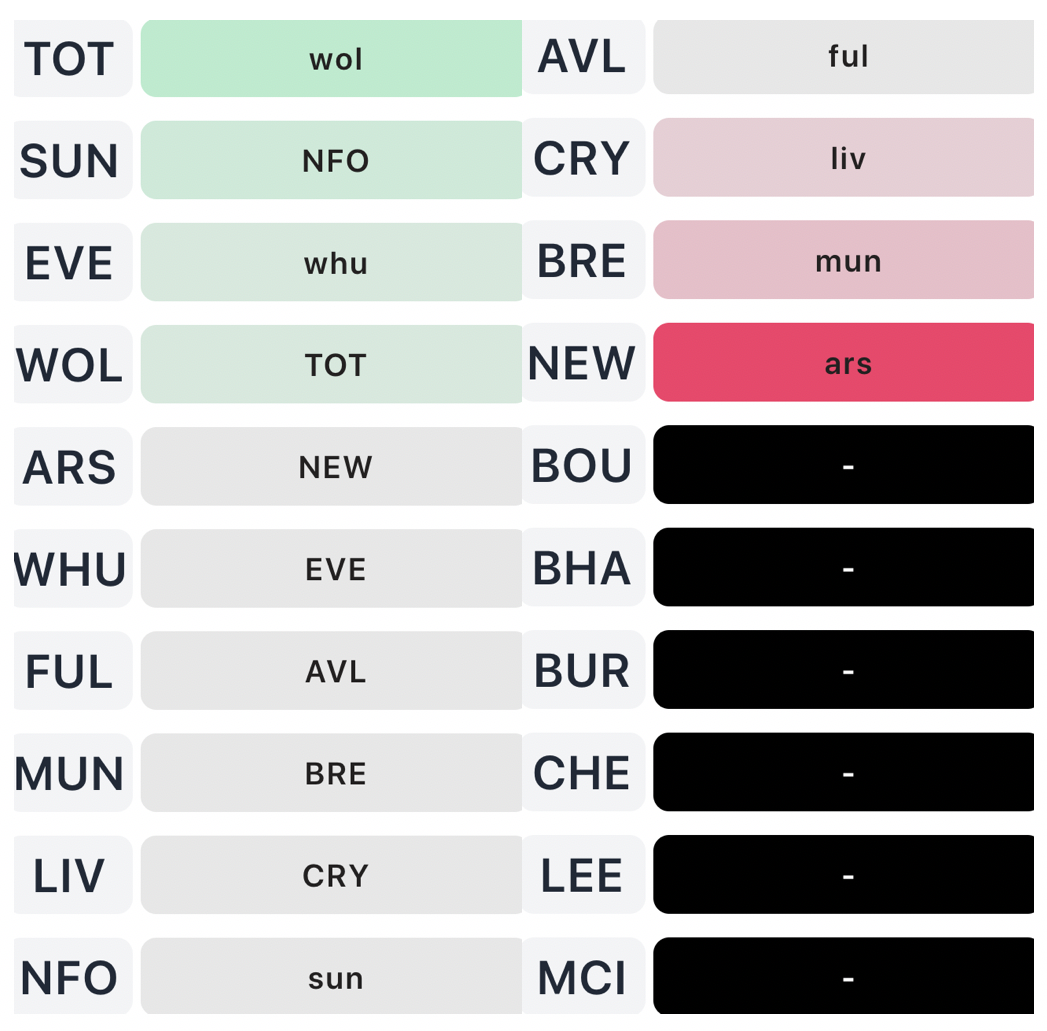
Gameweek 34 matches, ranked by difficulty in our Season Ticker
The fight doesn’t score many points, but either way, it’s part of a much larger plan (which could include Triple Captain 36 if you still have it), and probably shouldn’t be focused on in isolation.
GAMEWEEK 32 WILDCARD: CONS
Not a great entry point
One of the ‘cons’ of playing Wildcard Gameweek 32 is the fact that many of the Gameweek 33 ‘doublers’ have poor entry points.
Bournemouth and Leeds visit Arsenal and Manchester United respectively, for example.
Then there are Man City and Chelsea playing each other. You might get five or six of your starting XI involved in that game alone, and this is far from ideal if there aren’t many goals.
So, the trade-off is clear: XI looks weaker this week, but plenty of players with two games in Gameweek 33.
No Arsenal players?
Arsenal not ‘doubling up’ in Gameweek 33 has made life difficult for the Gameweek 32 Wildcarders, as they have some good games between now and the end of the season.

There was no detrimental coverage of Arsenal in Matchday 32, for example, when Mikel Arteta’s side were the bookies’ favorites to keep a clean sheet.
You can of course include them Gabriel Magalhaes (£7.2m) in your Wildcard squad, which most managers would appreciate, but not ideal for maximizing Bench Boost chips in Matchday 33, when Arsenal visit Man City.
Arsenal + Palace transfer focus in Match Week 35/36
If you choose to exclude Arsenal players from your Wildcard, you may need to prioritize them in Matchweek 35, ideal for those who already have a few free transfers under their belt.
But if you don’t fall into this category, it gets a little more complicated, especially considering players from Crystal Palace may also need to transfer before their ‘double’.
Either way, this will give you a little more flexibility in transfers for the last few Gameweeks.
To help navigate this period, you might include someone like Ismail Sarr (£6.3m) in your Wildcard Gameweek 32. Bench Increasing one Match Week option isn’t ideal, but Palace at least have West Ham United at home.
GAMEWEEK 35 WILDCARD: PRO
Keep Arsenal players + your Gameweek 32 team
One of the main advantages of Wildcard is that you can retain your Arsenal players.
The same goes for Man Utd and Liverpool’s assets, who both have favorable fixtures in Matchweek 32.
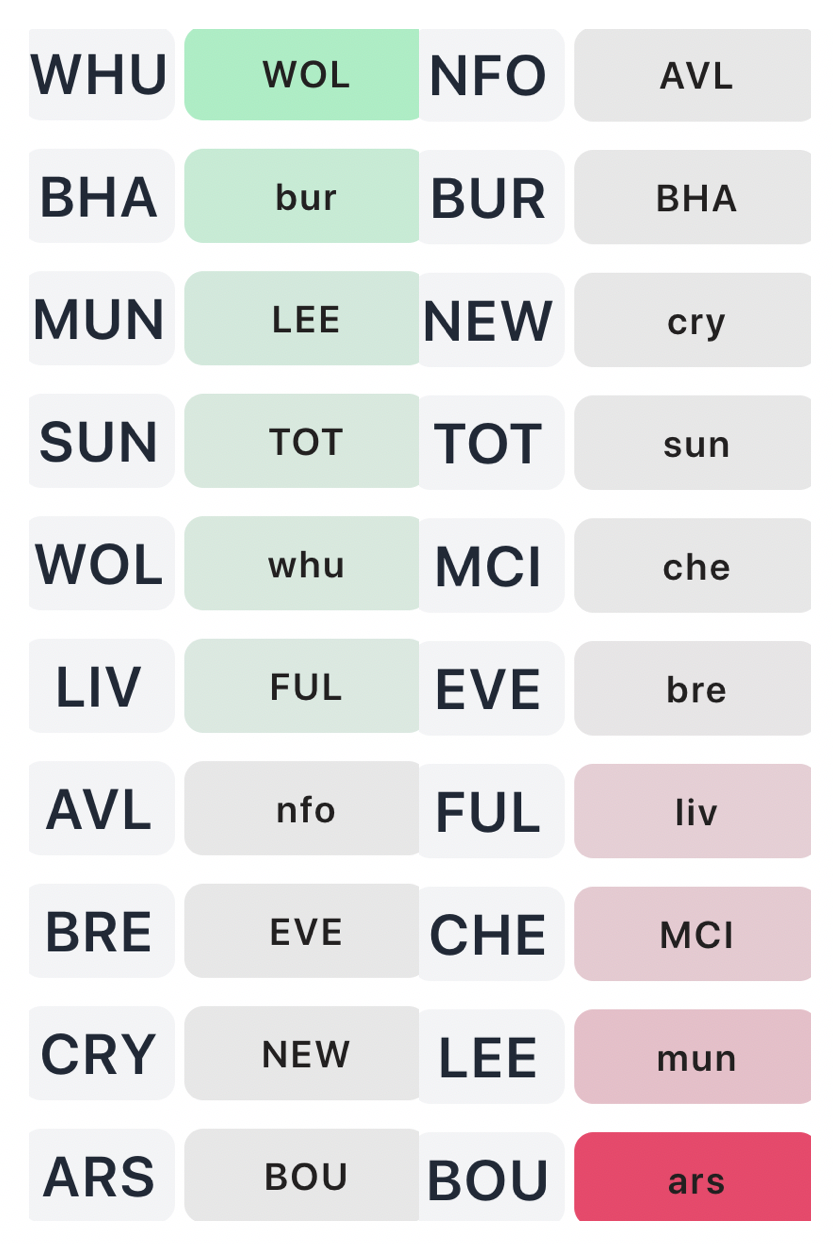
Gameweek 32 matches, ranked by difficulty in our Season Ticker
If you go Wildcard this week, you will probably give up the options mentioned above as they do not ‘double up’ in Gameweek 33.
As a result, by delaying, your potential immediate points will likely be higher.
Game Week 33 Free Hits

Wildcard Gameweek 35 can be preceded by Free Hit Gameweek 33, which allows you to field a full ‘doubler’ team.
This means Free Hit chips can be used a little more aggressively, knowing that you don’t have to commit to these players for the rest of the campaign.
This could be a short-term opportunity for the Bournemouth forward, or perhaps Man City Rayan Cherki (£6.3 million).
If you choose the Wildcard Gameweek 33 Free Hit/Gameweek 35 approach, you can differentiate this week even more with players like Matheus Cunha (£8.0 million) and Jarrod Bowen (£7.6m), who enjoy decent home fixtures on both sides.
Get ready for Palace Doubles Match Week
The Gameweek 35 wildcard allows you to double Crystal Palace’s assets, as they are expected to ‘double’ in Gameweek 36.
We will know if they are still in Europe at that time, which may influence our decision on who to invest in.
Additionally, you can target players from teams such as Arsenal, Newcastle United and Leeds, who have had some favorable matches in the last four Matchweeks, at which time we will also find out each team’s motivation in those matches.
GAMEWEEK 35 WILDCARD: CONS
Are ‘double’ Palaces really that interesting?

Crystal Palace are likely to face Everton (h) and Man City (a) in Gameweek 36, which isn’t the easiest ‘double’ on paper, especially if Pep Guardiola’s side are still in the title race.
Wildcard’s further appeal would also take a hit if Palace were still in Europe, with the UEFA Conference League semi-finals due to take place either side of Gameweek 35, which in turn would increase the risk of domestic rotation/minute management.
The Eagles are also the bookies’ current favorites to win the Conference League.
Worse Bench Boost?
If you do Bench Boost in Gameweek 36, you will probably do it with single Gameweek options, not ‘doublers’.
This may have limited advantages compared to Gameweek 33, when the Wildcarders could enjoy three bench options by playing twice, as well as Fernandes.
In Gameweek 36 Bench Boost, you might see cheap options such as Brighton (hosting Wolverhampton Wanderers) and Aston Villa (away to Burnley).
Time is running out
As we reach Matchday 35, we are nearing the end of the 2025/26 season, giving the Wildcards limited time to make an impact and climb the rankings.
By entering Gameweek 32, this at least gives you a few more rounds of play to try and maximize your chips as much as possible.
Lastly, if you choose to go with the Wildcard Gameweek 35 approach, it’s important to consider Blank Gameweek 34 and make sure you have enough starters without taking too many points.

PakarPBN
A Private Blog Network (PBN) is a collection of websites that are controlled by a single individual or organization and used primarily to build backlinks to a “money site” in order to influence its ranking in search engines such as Google. The core idea behind a PBN is based on the importance of backlinks in Google’s ranking algorithm. Since Google views backlinks as signals of authority and trust, some website owners attempt to artificially create these signals through a controlled network of sites.
In a typical PBN setup, the owner acquires expired or aged domains that already have existing authority, backlinks, and history. These domains are rebuilt with new content and hosted separately, often using different IP addresses, hosting providers, themes, and ownership details to make them appear unrelated. Within the content published on these sites, links are strategically placed that point to the main website the owner wants to rank higher. By doing this, the owner attempts to pass link equity (also known as “link juice”) from the PBN sites to the target website.
The purpose of a PBN is to give the impression that the target website is naturally earning links from multiple independent sources. If done effectively, this can temporarily improve keyword rankings, increase organic visibility, and drive more traffic from search results.
Comments are closed, but trackbacks and pingbacks are open.